
Our Story
TL;DR: We’re one of America’s first food co-ops, a plucky little experiment in community ownership that took off big. We aren’t owned by one guy with his own private space program—we’re owned by you! We’re now one of the largest food co-ops in the country, born out of the idea that “profit for the few” is boring and “maple syrup for the many” is a much better business model.
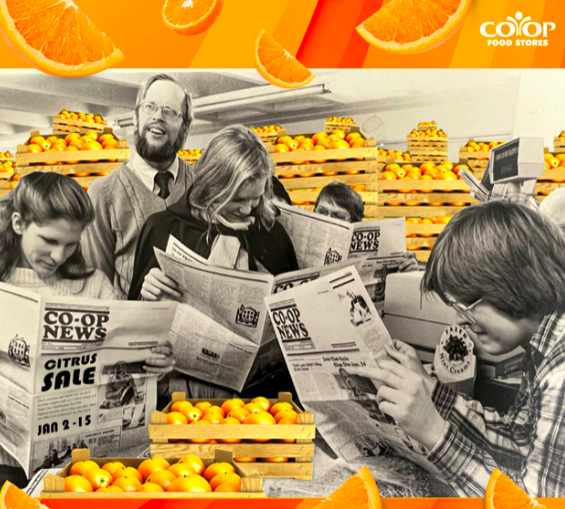
1936: 17 neighbors in Hanover, NH, and Norwich, VT, pool their resources to form the Hanover Consumers Club. They order things like maple syrup and cases of citrus.
1937: The Hanover Co-op is a thing—a sticky, delicious uprising that proves you can fight the Man with quality syrup and a really good grapefruit.
1940s–1950s: The little co-op graduates from a basement to a storefront downtown. We introduce the area’s first self-service grocery model, trusting people to pick their own onions without professional supervision.
1963: The Hanover Co-op moves to its current location on Park Street. The charm of the little storefront is exchanged for better parking.
1980s: We figure that if we can source kale, we can fix a radiator. Our auto service center is born. Members can now get an oil change and organic tomatoes from the same business.
1997–2000s: Growth spurt! We add two more food stores, a community market, and another auto service center. (The brave little market eventually closes from a lack of foot traffic. *sniff*)
Today: 33,000+ members, 400+ local vendors, 3 food stores, 2 auto service centers, nearly $100M in yearly sales. (A staggering amount of local produce and granola if you stop to think about it.)